Context
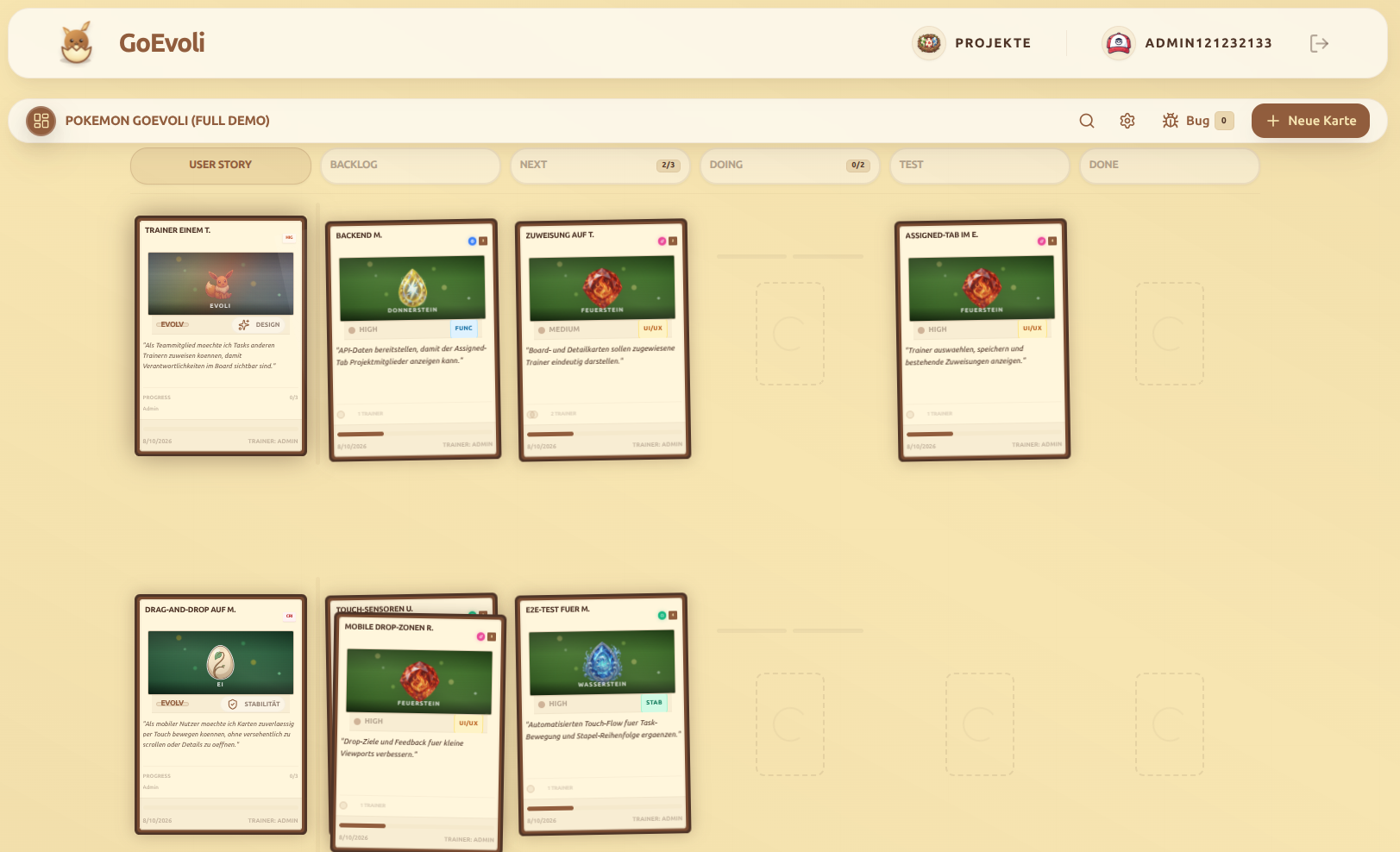
Project work should feel simple and engaging, like a board or card game. GoEvoli turns stories, tasks and bugs into an Eevee-inspired board with cards, evolution stages and clear Kanban columns.
Approach
I built the card interface with React and TypeScript and the API with Go and Chi. MongoDB stores projects, stories, tasks and bugs; security rules run on the server.
System
- React / TypeScript: playfield, collectible cards and board interaction
- Go / Chi: API, authentication and protective middleware
- MongoDB: projects, stories, tasks and bugs
- Docker: deployment
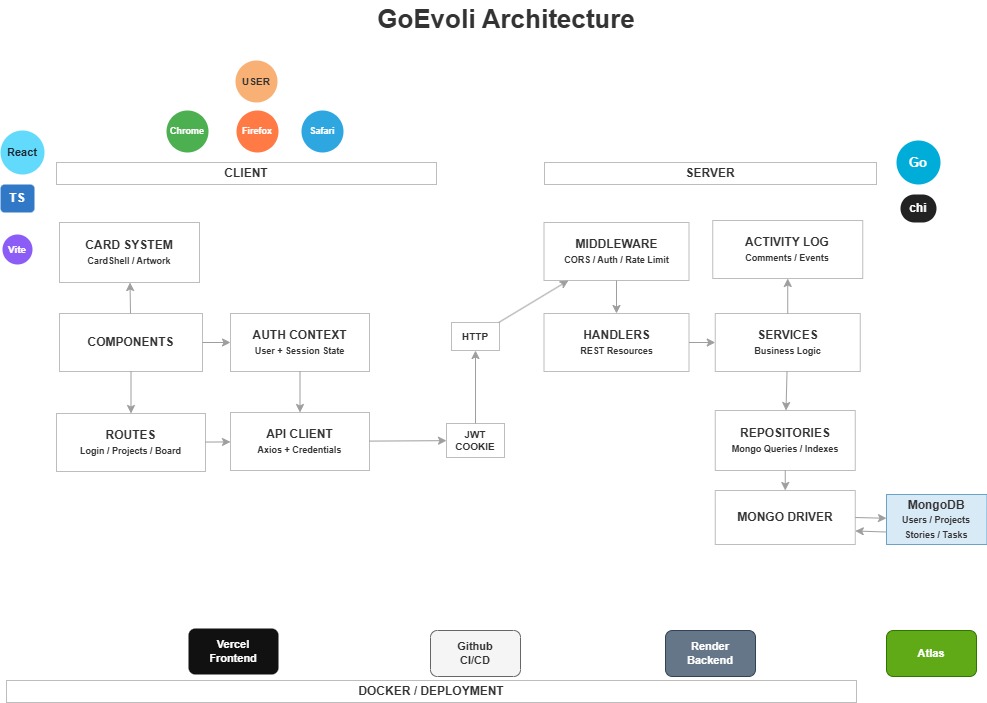
- Network
- Backend
- Interface
- Operations
Engineering decisions
- Show stories as an egg, Eevee or an evolution and tasks as cards with artwork for each type; keep Kanban columns and WIP limits visible.
- Limit failed logins, registration and email checks separately per IP; return HTTP 429 when a limit is exceeded. Trust forwarded IPs only from configured proxies.
- Check allowed origins for state-changing browser requests and authorize project actions by membership and role.
- Render the project, stories and bugs first, then load task stacks independently so a slow request does not block the whole board.
What did not work
There is no permanent IP blocklist: rate limiting slows requests temporarily. Explicit backend security headers and robust drag-and-drop controls remain open work.
Result
The board combines collectible cards with stories, tasks, bugs and WIP limits. HttpOnly session cookies, origin checks, project-level role permissions, IP-based rate limiting and HTTP timeouts protect the API.
What stayed with me
Cards show progress while the server limits access. Try to hack me: security-minded readers can inspect the public source and test responsibly with their own accounts or local instances.